

R&D may choose a shade, but quality teams have to decide whether the ingredient can be approved and repeated in production. When comparing Food Color Suppliers, they should look beyond a sample bottle and ask about specifications, documentation, formats, and technical support. FoodRGB positions its natural color range around application testing, custom formulation, and regulatory support for manufacturers. Bringing quality into the discussion early helps prevent a technically promising color from reaching pilot scale before basic approval questions, handling requirements, or consistency expectations have been settled.
Start With the Ingredient Specification
A color specification should give the team enough information to understand what is being purchased and how it is expected to perform. For annatto, that means checking the pigment system, physical form, concentration, recommended pH range and storage guidance rather than relying on the shade name alone. FoodRGB identifies bixin and norbixin as the main annatto pigments and lists a working pH range of about 5.0 to 10.0. Those details give R&D and quality a shared starting point before commercial trials begin.
Match the Format to the Process
Format affects more than convenience on the production floor. For a dry mix or regulated weighing phase, a powder might work well, or a liquid or oil-based alternative might fit another recipe more comfortably. FoodRGB lists annatto in powder, liquid, oil, and custom formulations, which gives developers several routes to test. Quality teams should confirm that the approved format is the same one used during trials. Changing form after approval can alter dispersion, dosing, and handling, even when the color source itself has not changed in practice.
Annatto Powder Needs a Real Trial
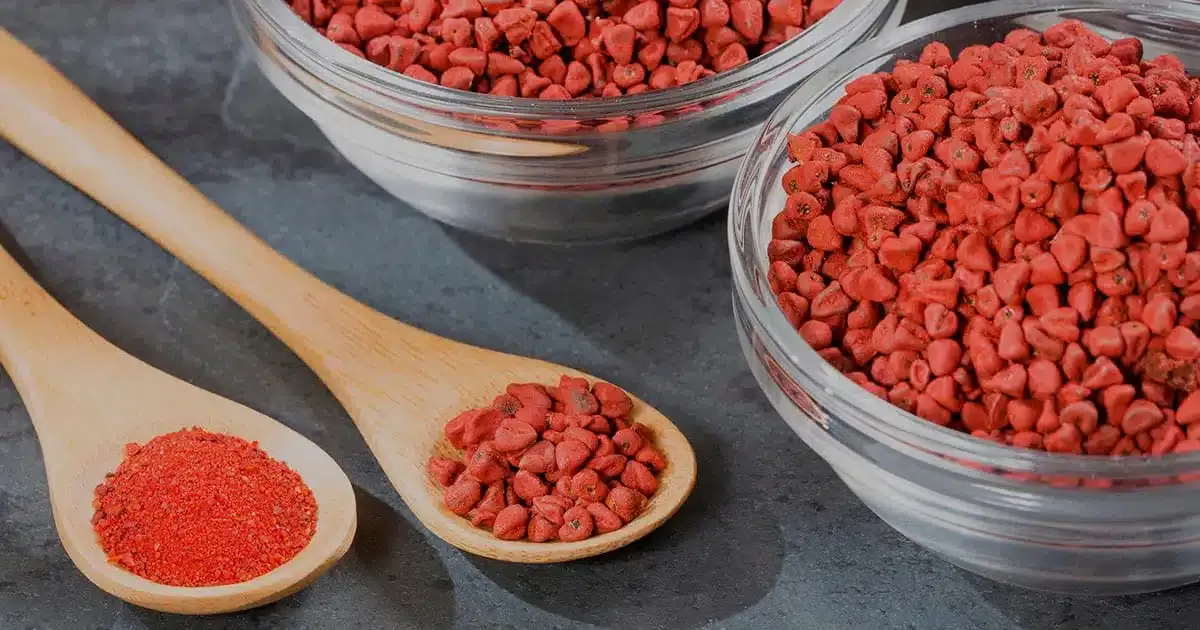
Annatto Powder can be practical for commercial foods, but it still has to prove itself in the actual recipe. FoodRGB lists annatto powder among its standard formats and describes annatto as heat-stable within its stated conditions. A dry seasoning, bakery mix, or processed food will expose that powder to different moisture levels, mixing patterns, and temperatures. Bench work should copy the intended addition method closely enough to reveal clumping, uneven distribution, or shade variation before the team moves to a larger production batch.
Bixin and Norbixin Are Not Interchangeable
The words annatto and orange do not tell the whole formulation story. FoodRGB explains that bixin is oil-soluble, while norbixin is water-soluble, so each can fit different product environments. That distinction matters in quality review because the wrong form can create problems even when the target shade looks correct. A cheese or fat-rich product may call for a different system from a beverage or water-based application. Recording the exact pigment type in approval documents helps purchasing and production avoid unintended substitutions later internally.
Test the Real Heat and pH
Technical data is useful, but it should not replace a process trial. FoodRGB describes annatto as heat-stable and suitable around pH 5.0 to 10.0, yet a baked snack, processed cheese, and heated sauce do not experience the same conditions. Quality teams should review the color after the actual heating, cooling, and holding steps used on the line. They should also confirm the pH of the finished formula. That combination shows whether the chosen annatto system performs consistently under realistic manufacturing conditions.
Consistency and Documentation Matter
Once a color is approved, the job shifts from development to repeatability. Quality teams need clear specifications, relevant certificates, lot identification, storage instructions, and a practical way to compare incoming material with the approved standard. FoodRGB also mentions the ability to provide unique formulations, and technical support, which might be helpful when a standard option needs to be adjusted. The team keeps track of pilot batches, so they have a reference for eventual manufacturing. If shade or handling changes, those records make it easier to identify whether the cause is raw material, process, or formulation.
Conclusion
Approving annatto for commercial use should connect formulation, quality, purchasing, and production rather than leaving each team to solve the same questions separately. The right color has to match the recipe, arrive in the approved format, survive the real process, and remain consistent from lot to lot. Manufacturers can use foodrgb.com to review natural color options and application support for commercial foods. A careful approval process may take more work at the beginning, but it reduces avoidable changes once the product reaches routine manufacturing and larger supply volumes.