

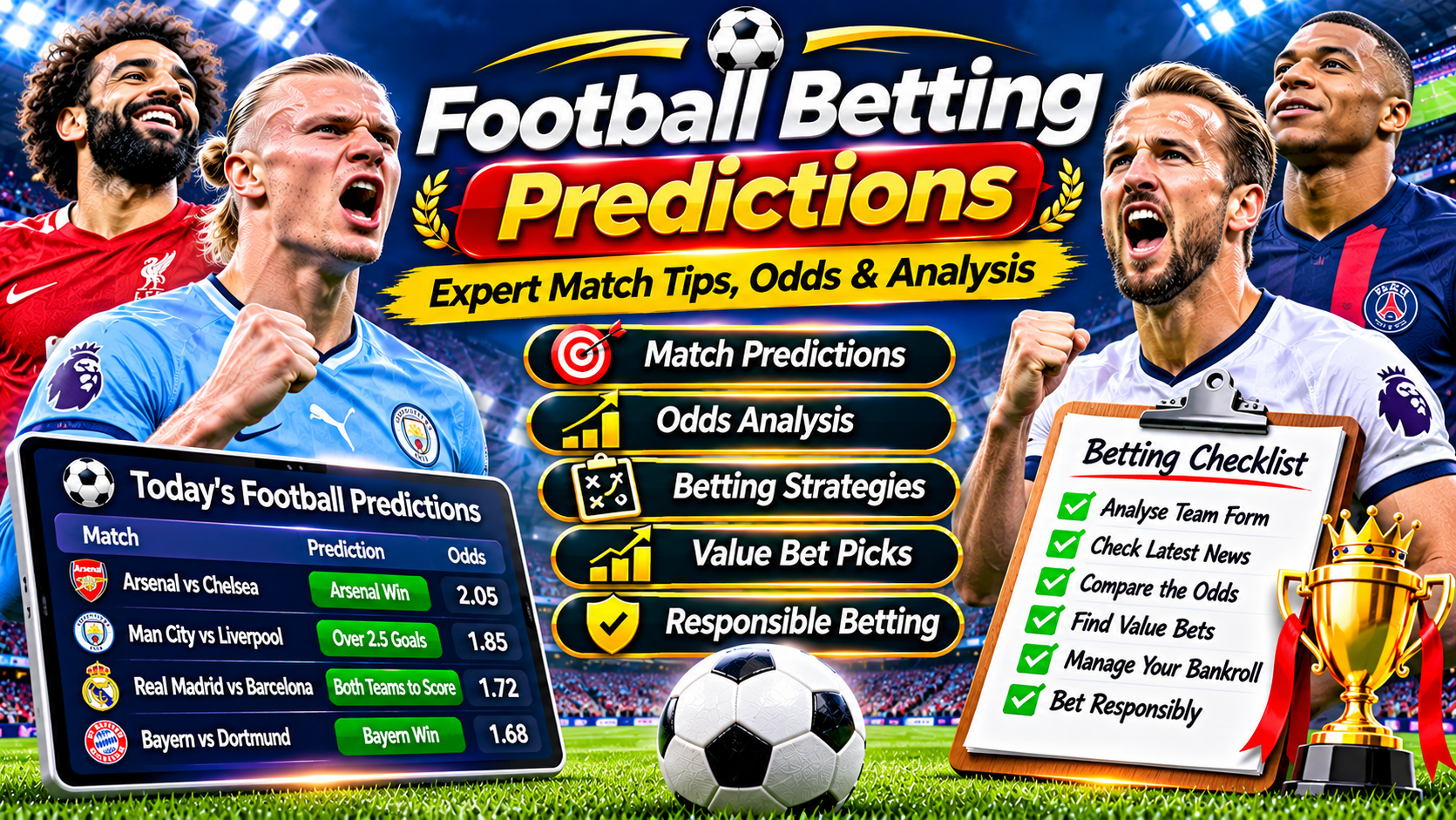
Start With Match Context and Team Form
Before you touch a sportsbook interface, build a quick picture of what’s actually happening on the pitch. Look beyond the scorelines and focus on how teams are playing: tempo, shot quality, defensive organization, and set-piece threat. A team can “look strong” in results while still being vulnerable in specific match phases.
Use multiple signals instead of one trend. For example, compare recent home and away patterns, but also check whether those patterns align with opponent strength. If a defense concedes clear chances even when the score stays tight, regression is often more likely than fans expect. Likewise, an attack that relies on a single creative player may struggle when that player is marked out or rotated. This context helps you choose markets that match the game script rather than chasing random outcomes.
Choose the Right Markets: Bets With Better Logic
Many bettors lose money by betting on outcomes that ignore probability. Instead, prioritize markets that reflect team behaviors you can justify. Over/under totals can work when you’ve identified consistent chance creation and finishing volatility, while both teams to score can align with styles that trade possessions. For tighter matchups, consider safer angles like “double chance,” “draw no bet,” or Asian handicaps that reduce the impact of a single goal swing. The key is to pick markets that reward the reasoning you already did.
Understand how odds relate to risk. Bigger payouts usually mean the sportsbook sees a lower likelihood, so you need stronger evidence to justify them. If your research points to a mismatch, you can target value by selecting the side or line that best matches the matchup dynamics. If your analysis is split, lean toward markets that refund more often or that hedge naturally. This approach keeps your bankroll protected while still allowing upside when your edge is real.
Example: if a team has strong defensive shape and limits shots on target, betting the opponent to score multiple goals may be harder to justify than betting for a lower total. If a match is likely to be cagey due to tactical caution, “under” lines often fit the script better than “away win” bets. If both teams create chances but also concede during transitions, both teams to score can be supported by observed game patterns. Always connect your bet to a plausible path to victory.
Build a Simple Odds and Value Checklist
Once you know what you want to bet, validate it with a practical value checklist. Compare your estimated probability to the implied probability from the odds, then ask whether your model is stronger than the market. Even a basic approach can help, such as estimating win chances from form, injury impact, and matchup style. If your estimated probability doesn’t exceed the implied probability, passing the bet is often the smartest decision. This discipline reduces emotional betting when games feel tempting.
Watch for common traps that distort value. One trap is “headline form,” where recent results hide underlying shot quality or defensive lapses. Another trap is ignoring lineup uncertainty, especially when key players are rotated or returning from knocks. If information is unclear, you may need to downgrade confidence or choose a less exposed market. Treat odds movement as a signal too—if the market shifts sharply after news, reassess before placing your wager.
Responsible value checking also means knowing your limits. Set a maximum stake per bet and a maximum loss per day so your decision-making stays clear. If you’ve already lost a few times due to variance, that doesn’t mean your analysis was wrong, but it may mean your risk exposure is too high. Consider using smaller stakes for “second layer” bets like prop totals, then scale up only when your edge is consistently supported. A repeatable process beats chasing losses.
Use Risk Management and Test Your Approach
Sports betting is not only about predictions; it’s about managing outcomes over a long run. Use a bankroll plan that accounts for volatility, especially in football where single moments decide tight games. A common strategy is to keep most bets at a conservative stake, then increase only when your confidence is backed by multiple indicators. Avoid going all-in on one match, even when the reasoning feels perfect. Confidence is not the same as control over variance.
Test your approach like you would a training plan. Track your selections, the market type, the odds, and the rationale you used, then review whether certain angles perform better. If you notice that certain bet types—like totals or both-teams-to-score—consistently underperform your expectations, adjust your process. If your best results come from specific conditions, such as teams with stable lineups or consistent attacking patterns, focus there. This turns betting into an improvement loop rather than a random sequence of wagers.
Consider how you handle uncertainty in player availability. If key defenders are missing, totals lines might shift, and under/over bets may become more or less attractive depending on the opponent’s chance creation. If an attacker is absent, the market may still price a side to win, but the value could move toward alternative lines that reflect reduced finishing. The practical guide is to translate news into game-state implications, not just into team strength headlines.
Conclusion
Smarter football betting comes from combining match context, selecting logical markets, and validating value with disciplined thinking. When you connect team styles, tactical matchups, and odds implications, you reduce guesswork and increase decision quality. This practical approach also supports responsible gambling because it encourages planned staking and clear acceptance criteria for every bet. Over time, a structured method helps you learn where your edge truly appears. Remember that no guide can eliminate variance, but a reliable process can limit avoidable mistakes. Use checklists, protect your bankroll, and review results to refine your model instead of betting on emotion. If you keep your reasoning consistent and your risk controlled, you’ll be better positioned to capitalize when the market misprices a matchup. Bet smarter, stay responsible, and let your process do the heavy lifting.